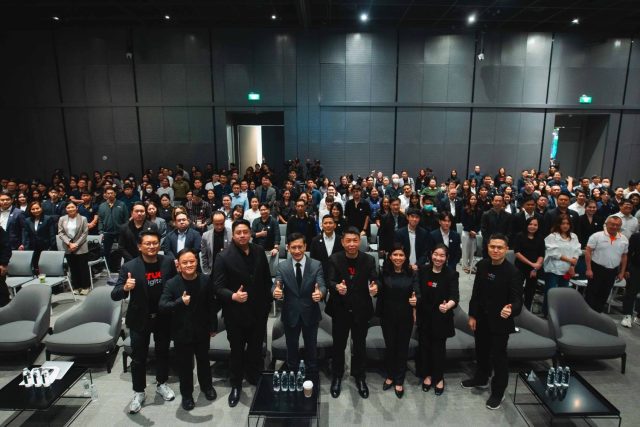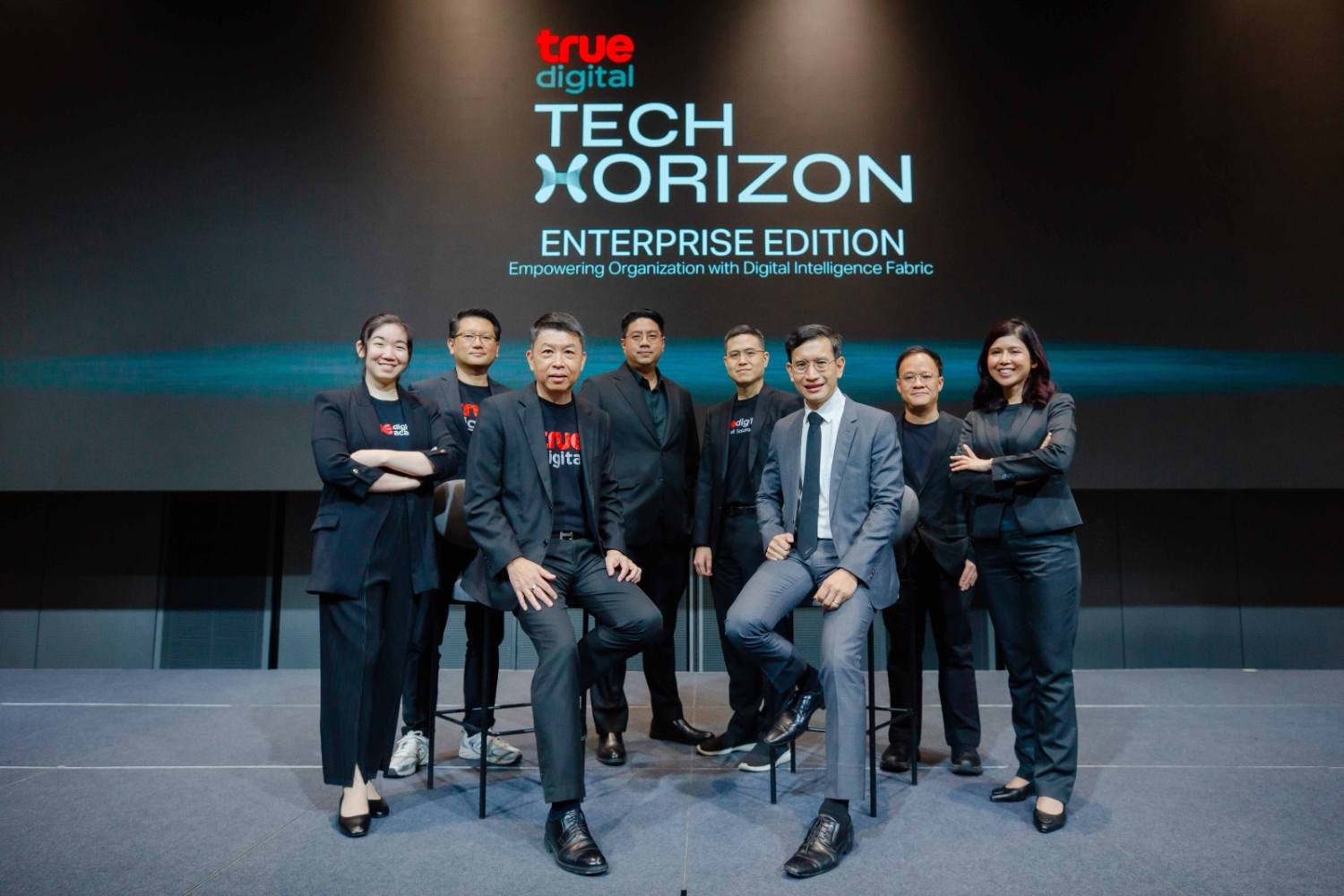
When technology is no longer an option but a matter of survival, True Digital Group decodes digital transformation through an in-depth look at Digital Intelligence Fabric, the next-generation digital infrastructure that Thai organizations must have, at Tech Horizon Enterprise Edition, Empowering Organization with Digital Intelligence Fabric.
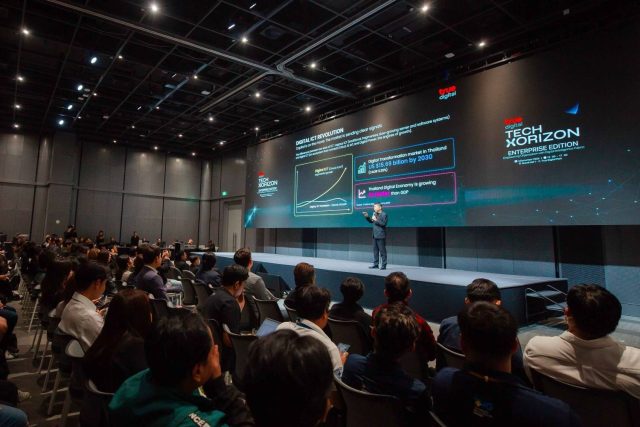 Bangkok, 26 December 2025.
Amid rapidly evolving technology, business organizations can no longer rely on gradual adaptation. The Tech Horizon Enterprise Edition Empowering Organization with Digital Intelligence Fabric seminar, organized by True Digital Group, a leading end-to-end digital services provider under True Corporation, reflected a shared perspective from both the public and private sectors that digital technology is no longer merely a tool to improve efficiency. It is becoming a new form of infrastructure that determines the future and competitiveness of organizations and nations, especially as future technologies increasingly converge. AI, IoT, Cloud, Data, and Cybersecurity can no longer be viewed or managed in silos as in the past.
A new era of infrastructure is the only path forward as traditional technology approaches reach their limits.
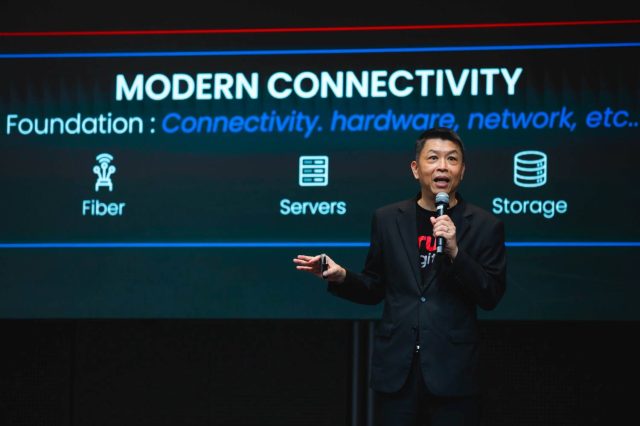
Mr Ekaraj Panjavinin, Chief Digital Officer of True Corporation Plc and President of True Digital Group, shared his perspective that organizational digital transformation has reached a critical turning point. Future technologies will no longer operate as standalone systems but will be interconnected and work as one, with AI at the core.
If organizations continue to rely on legacy infrastructure, adopting new technologies will only increase complexity rather than create a competitive advantage, becoming a barrier to long term growth and competitiveness.
The core challenge for many Thai organizations is not the lack of technology adoption, but investment without a clear policy or direction. Closed systems that are not interconnected, data that is not ready for use, the absence of truly integrated automation design, and overly complex technologies all lead to high investment costs without delivering the expected business outcomes. This results in increased operational burden and system maintenance costs.
However, these challenges can be addressed through the key characteristics of modern technology, which must be automated, easy to use, cost-effective, flexible, scalable, seamlessly connected across systems, and built on open architecture to enable efficient integration and future expansion.
Mr Ekaraj emphasized that organizations must elevate their infrastructure across three layers. The foundation is intelligent and secure connectivity that can manage usage priorities. On top of that is Digital Intelligence Fabric, which connects and enables applications across organizations. The top layer consists of on-demand applications such as ERP and CRM that organizations can adopt based on their needs. Technology only creates value when it is fully integrated with the business, supported by people who understand both the technology and the organizational context. Aligning business strategy with the right digital infrastructure is the key to sustainable competitiveness and growth in the digital era.
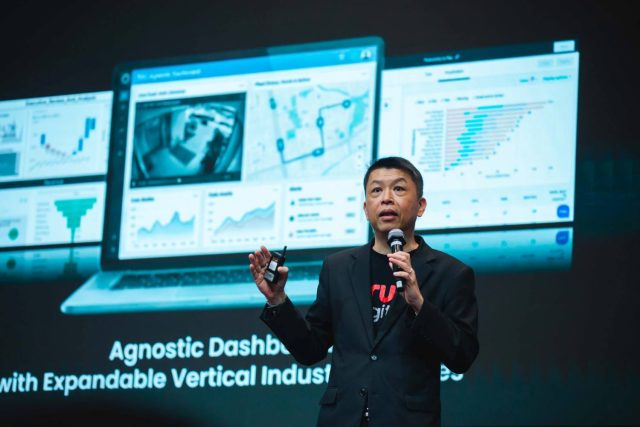
Digital transformation is the key to unlocking over 1.8 trillion baht in economic opportunity for Thailand.
Dr Preesan Rakwatin, Acting Senior Executive Vice President at Digital Economy Promotion Agency (DEPA), shared the public sector perspective on strengthening Thailand’s digital economy ecosystem. At the national level, digital transformation is not just about improving organizational efficiency but is a decisive factor in Thailand’s economic competitiveness. Recent assessments indicate that if Thailand does not accelerate its digital transformation, it could lose economic opportunities worth more than 1.8 trillion baht due to organizations continuing to operate in traditional ways and failing to fully leverage digital capabilities.
Reliance on manual labor and processes, along with decision-making based on experience or intuition rather than data and analytics, leads to hidden losses and stagnant national growth, while neighboring countries continue to grow rapidly.
Key obstacles for businesses are not limited to leadership vision or investment capital. They also include a lack of confidence in technology, uncertainty about selecting the right solutions, and concerns over whether personnel can effectively use new systems. To address this, DEPA has developed a comprehensive support mechanism, ranging from the dSURE standard to build trust in quality and security, the Thailand Digital Catalog to provide access to reliable solutions, financial and tax incentives, and workforce capability development through the Digital Skill Roadmap. Collaboration between the public and private sectors, including True Digital Group, plays a crucial role in making digital technology accessible, practical, and scalable for organizations of all sizes.

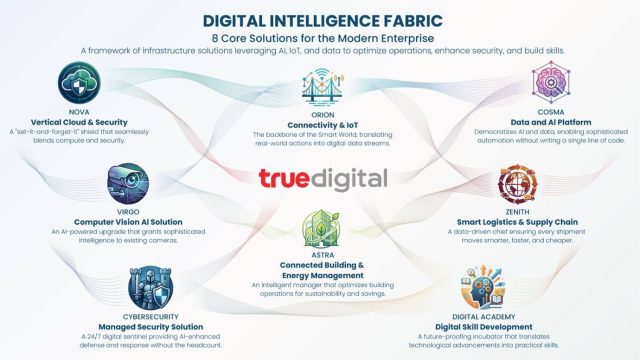
Digital Intelligence Fabric with 8 intelligent solutions for organizations of every scale.
Digital Intelligence Fabric is a digital framework that weaves together infrastructure-level connectivity through mobile networks and broadband internet, extending to software and application layers. It empowers organizational systems to operate at full efficiency, reduces complexity, increases accuracy, and ensures that technology delivers real outcomes.
It consists of 8 core components.
-
Vertical Cloud with Embedded Security, an intelligent cloud with built-in security.
-
Connectivity and IoT Platform, seamlessly connecting devices, machinery, and sensors to the digital world.
-
Computer Vision AI, instantly enhancing existing CCTV systems with AI without replacing hardware.
-
Connected Building and Energy Management, a platform for building and energy management that reduces costs and supports sustainability.
-
Smart Logistics and Supply Chain, intelligent transportation and supply chain management systems.
-
Data and AI Platform, unlocking the power of data from all sources to generate revenue, reduce costs, and accelerate AI deployment.
-
Managed Cybersecurity, comprehensive security services protecting organizations from modern threats around the clock.
-
Digital Skill and Development, empowering people to grow alongside technology.
Organizations can adopt these solutions based on their needs and manage them through a central platform known as the Unified Intelligence Center. This single platform supports multiple solutions, connects all systems into one dashboard, and enables organizations to monitor, analyze, receive alerts, and take action from a single point. It also supports business expansion, problem-solving, and delivers tangible outcomes in speed, investment efficiency, and ROI.
conclusion
The conclusion from Tech Horizon Enterprise Edition, Empowering Organization with Digital Intelligence Fabric, clearly shows that the future of organizations does not depend on having the most advanced technology, but on having an infrastructure capable of intelligently connecting systems and data. Digital Intelligence Fabric is not merely a technical concept but a business strategy that modernizes infrastructure, enables the right starting point, ensures cost-effective investment, drives operational efficiency, and delivers measurable results in practice.